

I am going to start with a little story… a couple weeks ago I was in our duck run – fluffing their pillows (or straw). Since we deep litter the run and house in the winter, this fluffing literally is just the top layer to get the duck droppings off the top layer before adding more straw. And I noticed an acidic ammonia smell. Which is not a good sign. It’s an indication of too much water and droppings and too little ventilation.
It really did not surprise me that I was smelling it. Because within the last 2 weeks we have had almost 30 inches of snow topped with an inch of rain and our days had warmed to the 40’s and 50’s. In just few days we lost over a foot of snow to melting. And after a week and a half almost all the snow was gone. Super weird weather for February and March, I am not going to complain about the warmth – but still…weird.
So, what’s a girl to do?
Usually in February and March, it is still cold enough that I can throw down some baking soda and let it stay compressed until warmer (and dryer) weather allows for the full coop/run clean out which is usually in late March/April. But this year, after our big snowstorm I had noticed a crack in the clear plastic roof that we have over a portion of their run. It has had some cracks before, not a big deal, knowing that we were going to be replacing that portion in the spring, I ended up taping the crack (I use is a silver tape – not duct tape). It has worked well in the past, but I think the excessive water that we received was too much for it and it started to leak…sigh
I will note here – that even if your duck/chicken coop/run is covered – once warm weather starts to melt snow – everything always seems to be wet – at least for a few days. And especially if you have ducks!
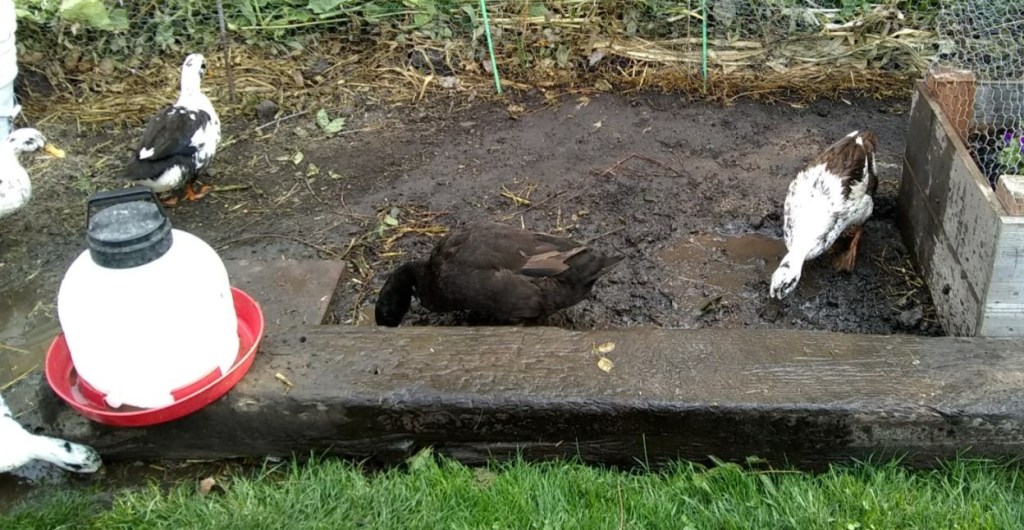
In comes the good’ole bucket. It sat in the house and collected the water nicely. But I was still smelling the ammonia a few days later, even worse than before and I knew something more drastic had to be done. After checking the weather and seeing that our nighttime lows were looking to be in the 20’s, I decided to take down their wall covers and pull out the portion that was the worst. Sigh, unfortunately that ended up being half the run. Talk about a lot of stinky straw.
What I did not know while dragging all the straw out, was that all that snow and rain, from not just our yard but the back portion of our neighbors’ yard, had decided to make a mini creek thru the duck run…ugh. I could actually see the water flowing, not what you want to see in February.
Since we still had a lot of snow on the ground and warm temperatures coming, I decided to relegate the ducks to the other side of the run until it dried out. Which was about a week. Let me tell you they were not happy, and I heard about! But that’s ok, because at least they were dry(er) on that side.
For about a week I checked the wet side daily – then it finally dried out enough that I felt it would be ok for them to back on that side. But before they were allowed back, I threw down some old pallets and flat wood scraps then placed their straw on top of that. Since then, it has been over a week, and so far, I have not noticed any other smells or moisture issues. Thank the Good Lord!
——————————————–

So back to the main topic of this post “Keeping your coop/run dry” – You need to start with some questions!
1) Why is it getting wet?
Weather played a big part. We had a lot of snow, then rain, then abnormally warm days (still having them). But in the past, we have not had any issues, we have had the run for 3 years – and nothing like this has happened before. Hmm, that led to another question –
2) Where is the water coming from?
If it is the weather, really there isn’t a whole lot you can do about, other than making your flock an ark. I had initially though the crack we had in roof had made the problem, but we keep the roof cleared and the amount of water was way more than the crack would have let in.
So, after doing a little looking, thinking. I actually realized that the neighbors brand new shed that they put up directly behind our duck run was the culprit. All the snow slid off the top, got trapped between the run, fence and shed and then the rain on top. Ugh, again.
So if you are new to keeping birds, or just find yourself in a new situation with your flock, here are some ideas.
Ways to keep your Coop/Run dry:
- Fix the drainage issue – A lot of problems can be fixed by being able to divert the water somewhere else.
- Check soil type – Got hard pack soil? The water may not be able to soak in.
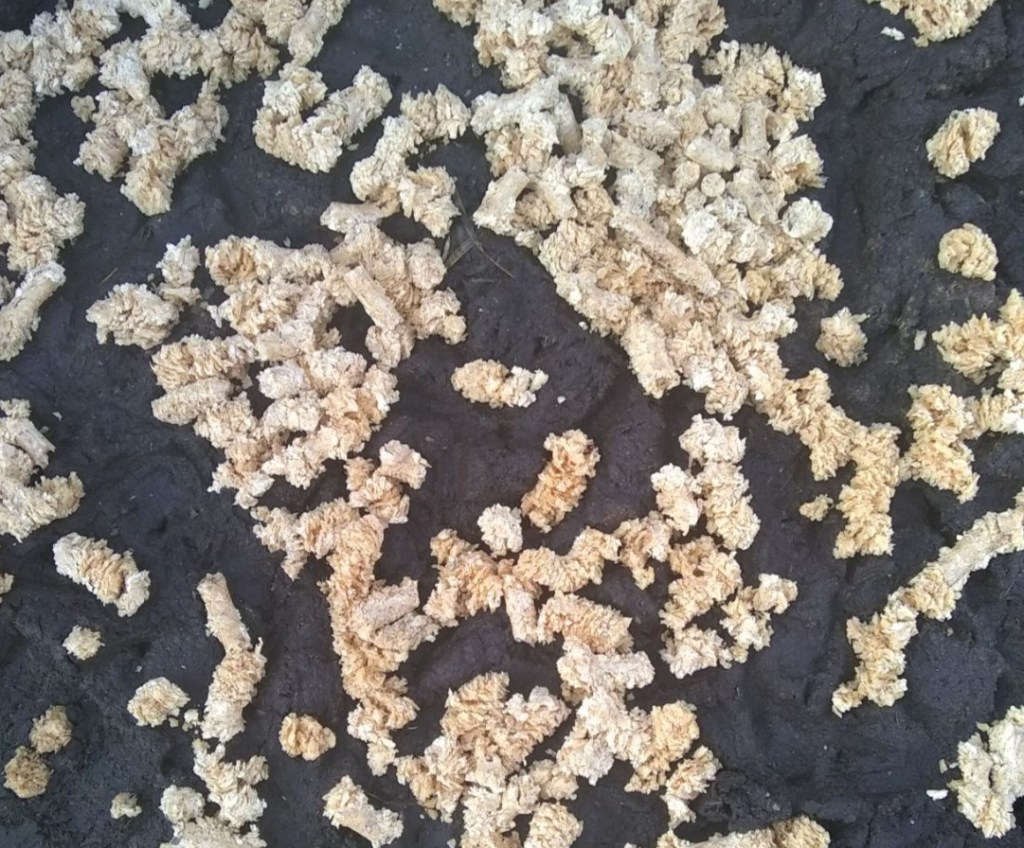
- Pelletized bedding or bedding pellets – They are compressed wood shavings. Very absorbent, and once used they leave a little better scent. We use them in the run, the aviary (outdoor run) and in the garden.
- Sand/gravel – I haven’t used either. I have read other blog that seem really happy with them.
- Straw- Good to keep dry, have to keep adding more BUT it will absorb the water. Which will make it heavy and kinda gross. (This is what we had down, now I have to think of a solution.)
- Pine Shavings – Same as straw
- Pavers/concrete pad – We have pavers for a path to the run through the aviary for me. It allows me to walk on something solid when the avairy gets gunky. I like the pavers idea, but it can be hard on the animals’ feet, and you have to think about cleaning. In winter, you can’t clean it very easily.
- Cover – I keep a cover up in the aviary year-round. It’s just a couple sawhorses with an old trellis over the top. In the summer it gives the ducks some shade, in the winter I put a piece of plastic over it, and it gives them a dry place to lay. I also put up hoop houses for them (you can see how I make mine HERE). Besides giving them a place to lay it is also a good place to put their food so it doesn’t get wet if it is raining/snowing.
No matter what you use, sometimes you have to realize and acknowledge that sometimes your coop and run are going to be wet. It just happens. Just being aware of what is going on and trying to help your flock the best way you can is all you can do.
Have a great day!
Dawn
Discover more from
Subscribe to get the latest posts sent to your email.

 mtdawn.com
Very interesting! We have never had ducks or chickens so this was very interesting to learn about. Thanks for sharing!