
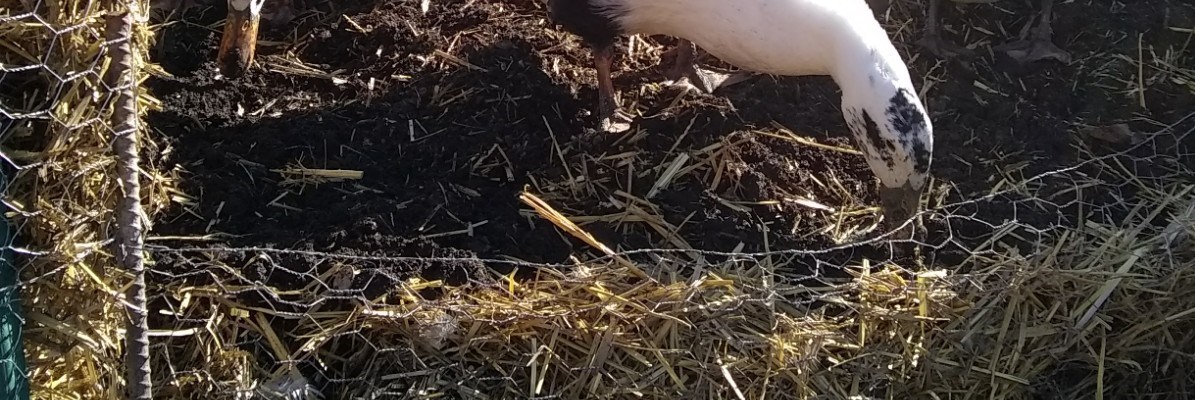

Compost Garden Beds
Good morning! I hope everyone is having a great week so far. I know here in the Bitterroot, we are finally seeing warmer temperatures and sunshine, which is giving everyone hope that winter is finally behind us.
I do want to mention that this will be my last lifestyle post. Over the last few months, I have been feeling an urge to move my attention to another path. I am not giving up the blog but am going to start focusing on what I love – and that’s photography. I haven’t had near the time to enjoy that passion and would like to develop it more and see what comes from it.
I hope you will join me on that journey, and now back to compost garden beds!
————————————————–
These compost garden beds, are actually based off of straw bale gardening.
I came to start making and using these because a few years ago, we ended up moving our garden. I was not super excited about the prospect of digging up a bunch of grass and tilling the new area, so I figured I would give straw bale gardening a try. I used the book Straw Bale Gardens Complete by Joel Karsten and followed the instructions. In the book, Mr. Karsten does a really good job of explaining what is going on, and in it, he even shows how to make your own straw bales, which is where I got the idea for the garden beds.
—————————————————
If you wonder about the success of the beds, you can check out the Morning Chat post from September of last year. In the post I talk about a Boston Marrow squash that we had growing – it was actually planted in a compost garden bed that I had last year – the average Boston Marrow is around 25 pounds, so I think we did pretty well with our 31 pounder!
I have also used straw bales to help with a bed that didn’t have the greatest soil. I just dropped straw bales on top of it and followed the instructions – enjoying a great gardening year to boot – and ended up with amazing soil (from the decomposed straw bale) and just tilled it into the bed
—————————————————
Anyway, the idea is fairly simple for these garden beds. I use the straw that we have in our duck house and run for these. It’s a lot – approximately 10 bales. And since the straw that is in the duck house spent all winter collecting the ducks poop, which is high in nitrogen, it had already started to decompose (which is great because as it started to decompose it heats up a little, which gives the ducks a little heat in the winter). I clean out the duck house and run and place all the straw into an already made bed. After everything was cleaned out, I went back with a good layer of bone meal mixed with wood ash. And gave it a good watering. I also use these for regular compost bins. I just use a hand rake to pull some of the straw back and dump in the compost – cover it back up and go on with my day. I did this the other day and it was already decomposing nicely, and just since I made them they have actually shrank (i.e. compacted) to about half of what they were.
————————————————–
The bed is simply u-posts and 2 foot chicken wire.
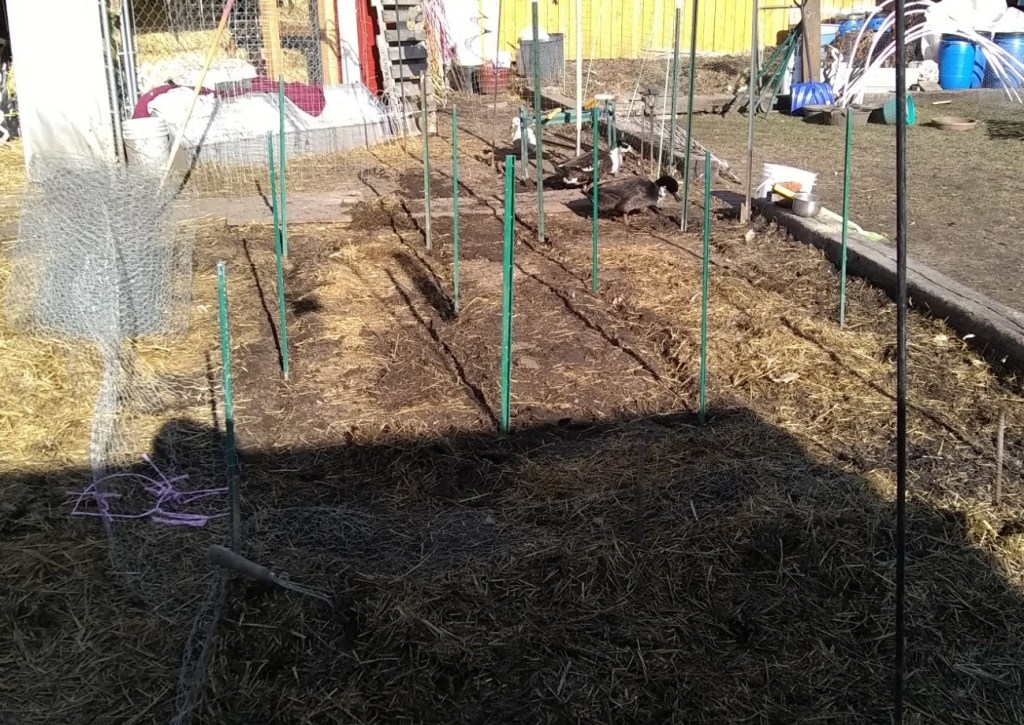
I put in the u-posts where I wanted the bed to bed – and since chicken wire is somewhat flimsy, I also added extra posts to any long sections.

Unroll the chicken wire and attach it to the u-posts with baling twine.

In the end I also added stakes (bright green) to any area that seemed to need a little extra support.
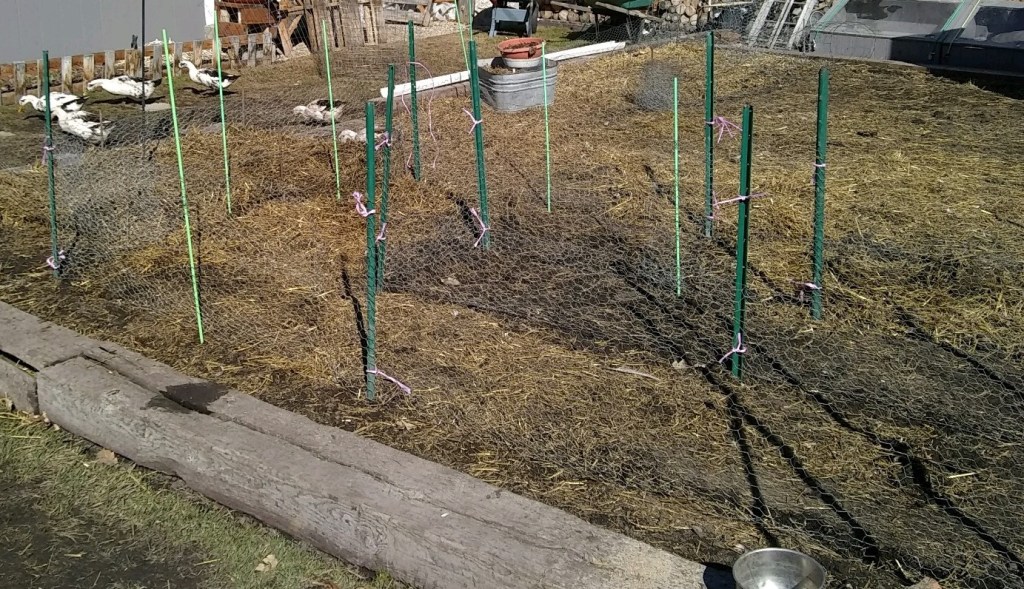
After the bed was completed, it was time to fill it. I use old straw from our duck house, then I climb in the bed and smoosh down the straw. Add more, climb in and smoosh it down some more. Then repeat again – if necessary. During this process I also add dried egg shells and old coffee grounds to the pile, it will help enrich the pile and make better soil.
I will note that once the beds start to compost they will shrink in size – I have had some shrink to almost to 1/3 of what they were. And that’s ok -they are making beautiful soil!

After the beds are all done you can go back and cover them with garden or potting soil. And you can plant at any time. We are still a bit cool to plant what I have planned, so they will sit for a little longer and do their thing until it gets warm enough.
I will note, with these, I could plant earlier then I normally do (some stuff, I would wait on heat loving plants), but for a little while before – maybe up to a week cover the beds fully with plastic – essentially you are making a greenhouse. Once you plant, still keep everything covered at night – and vent during the day.

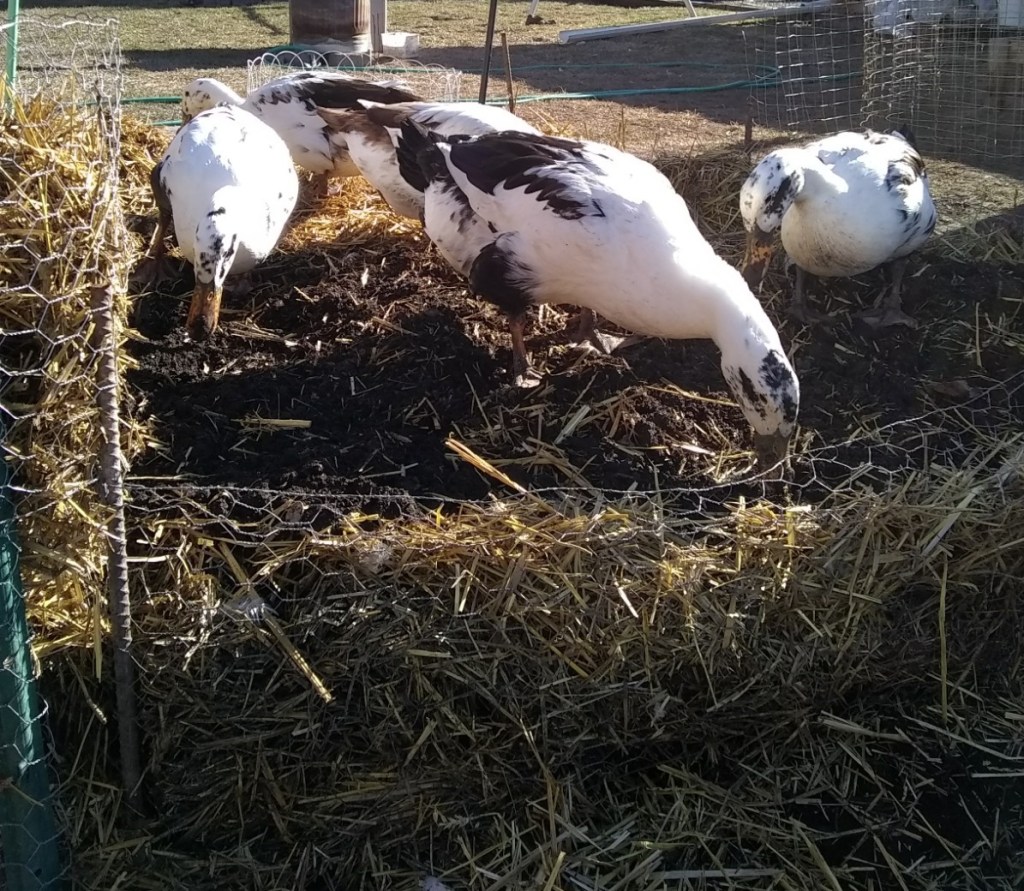
Look! – This bed has already sprung little ducks!
Have a great day!
-Dawn
Discover more from
Subscribe to get the latest posts sent to your email.

 mtdawn.com